Quiet your mind · 4 min

How to stop overthinking at night

To stop overthinking at night, move the thoughts out of your head and onto paper, then give your body something slower to follow. Write a specific to-do list for 5 minutes, breathe out longer than you breathe in, and if you're still awake after about 20 minutes, get up and do something dull in dim light.

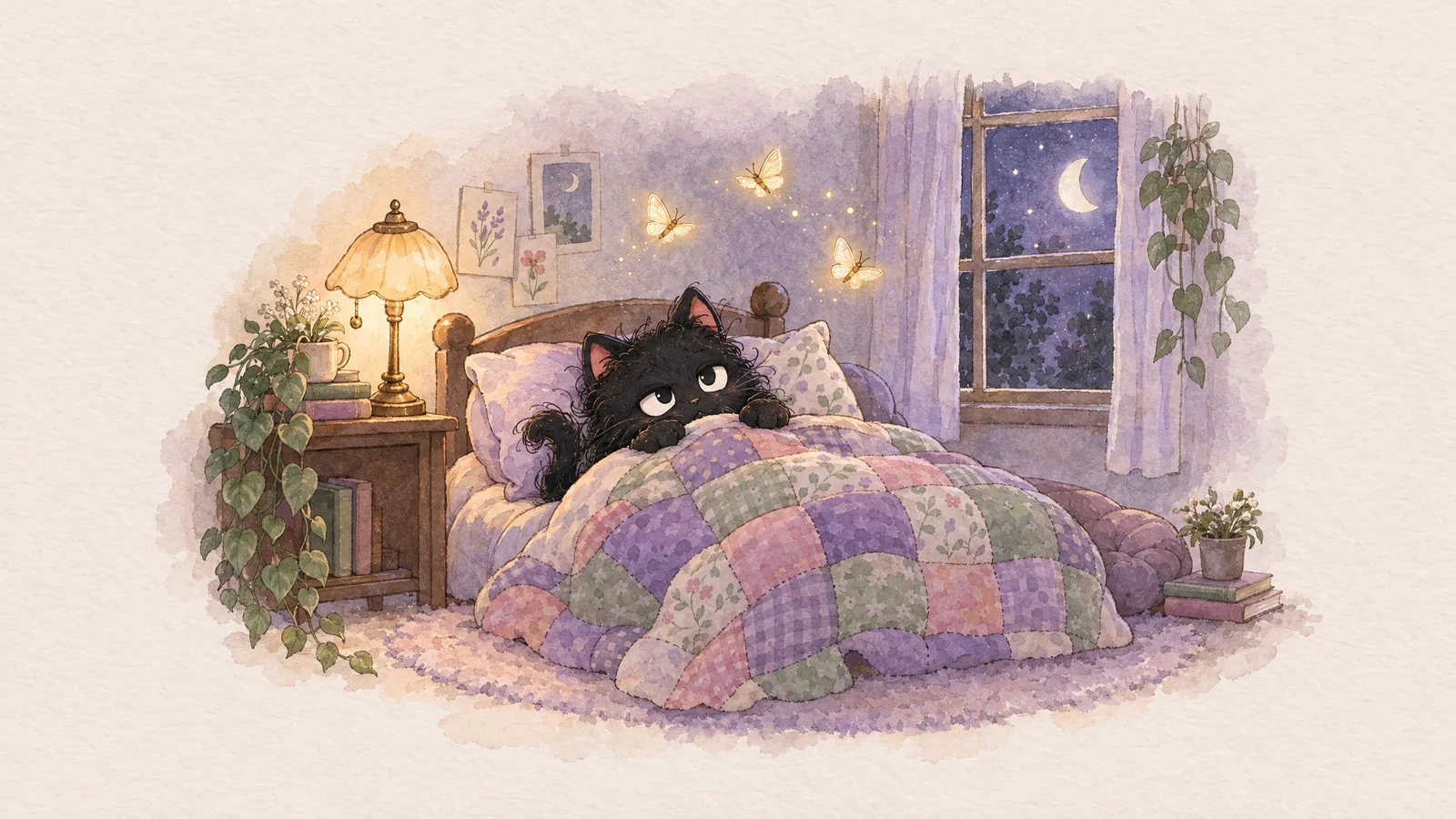
Mochi the black cat, overthinking at night.

Tap a thought to name it

How to do it

  1. 1
    Write tomorrow's to-do list

    Spend 5 minutes writing everything you need to do in the next few days. Be specific: 'email Jo about Friday', not 'work stuff'.

  2. 2
    Breathe out for longer

    In through your nose for 4, out through your mouth for 6 to 8. Keep going for 2 minutes. Let the out-breath be the slow part.

  3. 3
    Name it and set it down

    When a thought returns, give it a title: 'that's the work thing again.' Then add 'it's on the list' and go back to your breath.

  4. 4
    Use the 20 minute rule

    If you've been awake for what feels like 20 minutes, get up. Go to another room, keep the light low and do something boring.

  5. 5
    Go back only when sleepy

    Return to bed when your eyes feel heavy, not when the clock says so. Repeat the rule as many times as you need.

Why are racing thoughts at night so much worse?

During the day, noise and tasks keep your attention busy. At night, as Cleveland Clinic puts it, distractions are low and you're left alone with your thoughts. Stressful thoughts set off the fight or flight response, so your body reacts as if the problem is happening now.

There's a second trap. If you lie in bed worrying night after night, the bed itself starts to signal worry. That's why trying harder to sleep usually backfires.

What can I do when I can't sleep because of anxiety?

Get out of bed. It sounds wrong, but it's a core part of CBT for insomnia. The American Academy of Sleep Medicine describes it: use the bed only for sleep and sex, and if you're not asleep after about 20 minutes, get up and do something relaxing until you feel sleepy.

Good choices: fold washing, read something dull under a lamp, sit with a warm drink (not tea or coffee). Bad choices: work email, the news, checking their Instagram.

“If I don't fall asleep right now, tomorrow is ruined.”

“I'm lying here resting. Tomorrow I can cope with a tired day.”

Does writing a to-do list help you sleep?

One sleep lab study suggests it does. Scullin and colleagues asked 57 young adults to write for 5 minutes before bed. Those who wrote a to-do list for the coming days fell asleep significantly faster than those who wrote about tasks they'd already done. The more specific the list, the faster they fell asleep.

Keep a notepad by the bed so you don't have to pick up your phone to do it.

How do I stop anxiety at night before it starts?

Most of the work happens earlier in the evening.

  • Early evening: write your worries for 15 minutes, so they're not waiting for you in bed (Cleveland Clinic).
  • 6 hours before bed: no more tea, coffee or alcohol (NHS).
  • 1 hour before bed: start winding down, with a bath or a book (NHS).
  • 30 to 60 minutes before bed: screens away (Cleveland Clinic).
  • Every morning: get up at the same time, even after a bad night (NHS).

Questions people ask

Why is overthinking worse at night?

There's less to distract you, so unfinished worries come back. Stressful thoughts trigger your fight or flight response, and if you often worry in bed, your brain starts linking the bed with worry instead of sleep.

How do I stop racing thoughts at night?

Write a specific to-do list for 5 minutes before bed, then breathe out slower than you breathe in. If thoughts keep coming, label them ('the money one again') rather than following them.

Should I get out of bed if I can't sleep?

Yes. Sleep specialists recommend getting up if you're not asleep after about 20 minutes, doing something relaxing in low light, and only going back when you feel sleepy. Judge it by feel, not by watching the clock.

When should I see a doctor about sleep anxiety?

If racing thoughts keep you awake most nights, you're losing hours of sleep, or you feel exhausted during the day, talk to your GP. CBT for insomnia is a well established treatment.