Quiet your mind · 4 min

How to stop overthinking

To stop overthinking, interrupt the loop instead of trying to win it. Name it ('I'm replaying the meeting again'), ask if there's one thing you can do about it in the next 24 hours, and if not, write it down for a set worry time. Then give your body a job: slow breathing or 5·4·3·2·1.

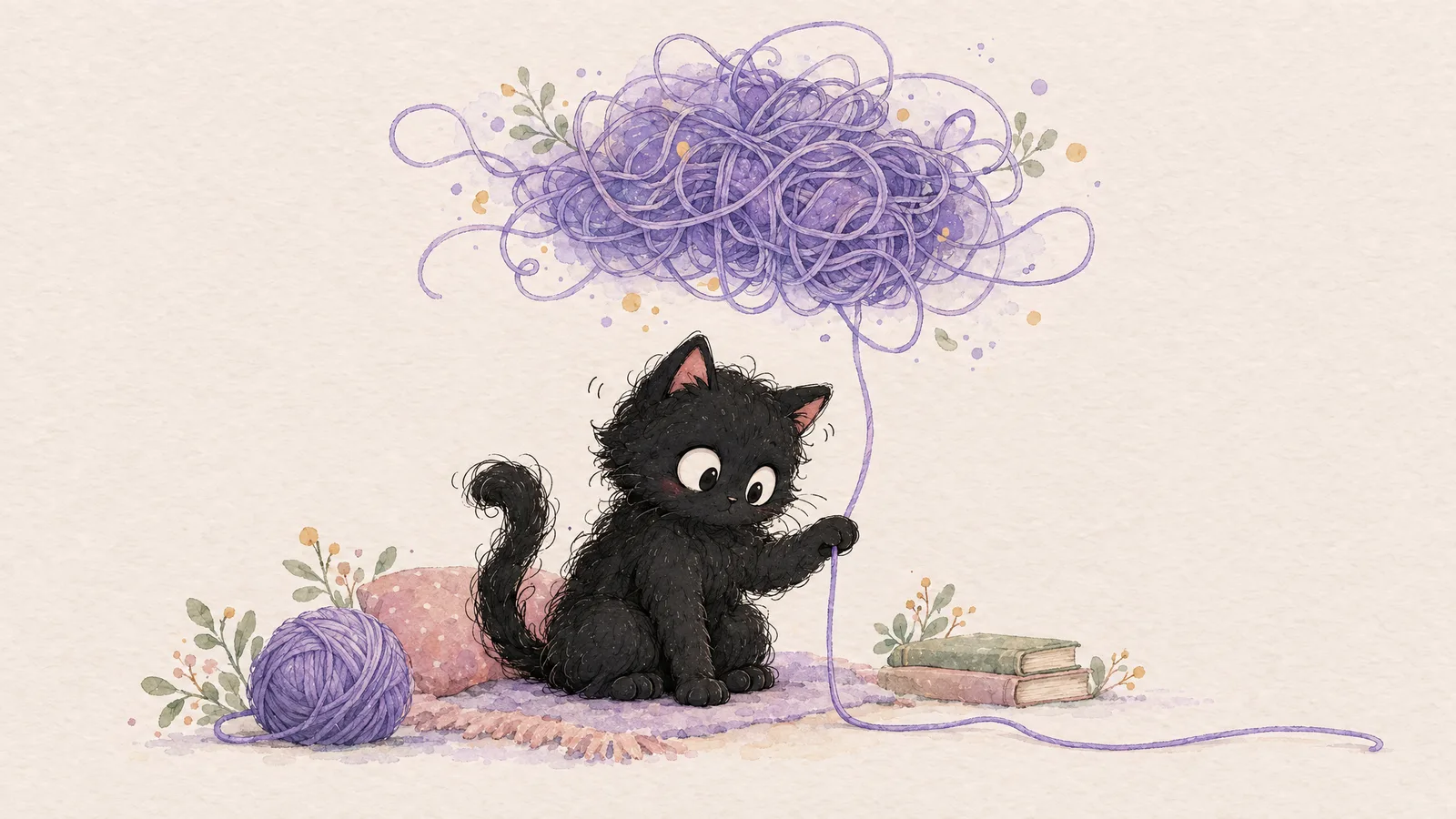
Mochi the black cat, stop overthinking.

Tap a thought to name it

How to do it

  1. 1
    Name the loop

    Say what's happening in six words or fewer: 'I'm replaying what I said to Priya.' Naming it puts you outside the thought for a second.

  2. 2
    Ask one question

    Can I do something about this in the next 24 hours? If yes, write the first step. If no, it goes on the worry list.

  3. 3
    Park it

    Write the worry in one line. Give it a slot, say 6pm tomorrow for 10 minutes. Until then, when it comes back, say 'it's on the list'.

  4. 4
    Give your body a job

    Box breathing: in for 4, hold for 4, out for 4, hold for 4. Do four rounds. Or name 5 things you can see.

  5. 5
    Move your hands

    Do one physical thing for 5 minutes: wash a mug, fold a jumper, walk to the end of the road. Thinking slows when your hands are busy.

What does overthinking actually mean?

Overthinking means going over the same problem again and again without reaching a decision. Cleveland Clinic draws the line clearly: problem solving looks for a practical fix, overthinking replays the issue like a broken record.

A quick test: has the last 20 minutes of thinking given you a new fact or a next step? If yes, you were problem solving. If you're on the same three thoughts in a slightly different order, you're overthinking, and more thinking won't get you out.

Why do I overthink everything?

There's rarely one cause. Cleveland Clinic says it's usually a mix of genes, personality (especially finding uncertainty hard to tolerate) and life experience.

It also feels useful. Replaying a conversation feels like preparing for the next one. Checking every option feels like being careful. The catch is that overthinking promises certainty it can't deliver, so your mind keeps going back for more.

“I just need to figure this out, then I can relax.”

“I don't need an answer tonight. I need to put this down.”

Is overthinking a sign of anxiety?

Overthinking isn't a mental illness on its own, but Cleveland Clinic notes it can be a symptom of anxiety or depression, most often generalised anxiety disorder.

A well known review by Nolen-Hoeksema and colleagues found that rumination (the repetitive, stuck kind of overthinking) makes negative thinking worse and gets in the way of problem solving. So the loop isn't helping you decide. If it's costing you sleep most nights or making work hard, talk to your GP. CBT is the usual first treatment.

What can I do instead of overthinking?

Swap the open question for a closed plan. Cleveland Clinic suggests turning each 'what if' into an 'if, then'.

  • 'What if I'm rubbish at the new job?' becomes 'If I struggle in month one, then I'll ask for a check-in.'
  • 'What if she's annoyed with me?' becomes 'If she's quiet on Friday, then I'll ask her straight.'
  • 'What if I picked the wrong flat?' becomes 'If it's not working by spring, then I'll look again.'
  • Ask what you'd tell a friend in the same spot. The NHS suggests this to see the bigger picture.

Questions people ask

Is overthinking a mental illness?

No. Cleveland Clinic says overthinking isn't a recognised mental health condition, but it can be a symptom of anxiety or depression, most commonly generalised anxiety disorder. If it's affecting your sleep or daily life, speak to your GP.

What is the root cause of overthinking?

Usually a combination: genes, personality traits like struggling with uncertainty, and past experiences. Stress makes it louder. The habit sticks because it feels like you're solving something, even when you're only going round in circles.

What is a worry period?

A set time each day, often 10 to 30 minutes, when you're allowed to worry on purpose. Write worries down, sort the ones you can act on, and postpone the rest until the next slot. Many people find the urge fades first.

When should I get help for overthinking?

If it keeps you awake most nights, makes it hard to concentrate at work, or comes with low mood or panic, talk to your GP or a therapist. CBT is the standard treatment and teaches you to challenge the thoughts.